
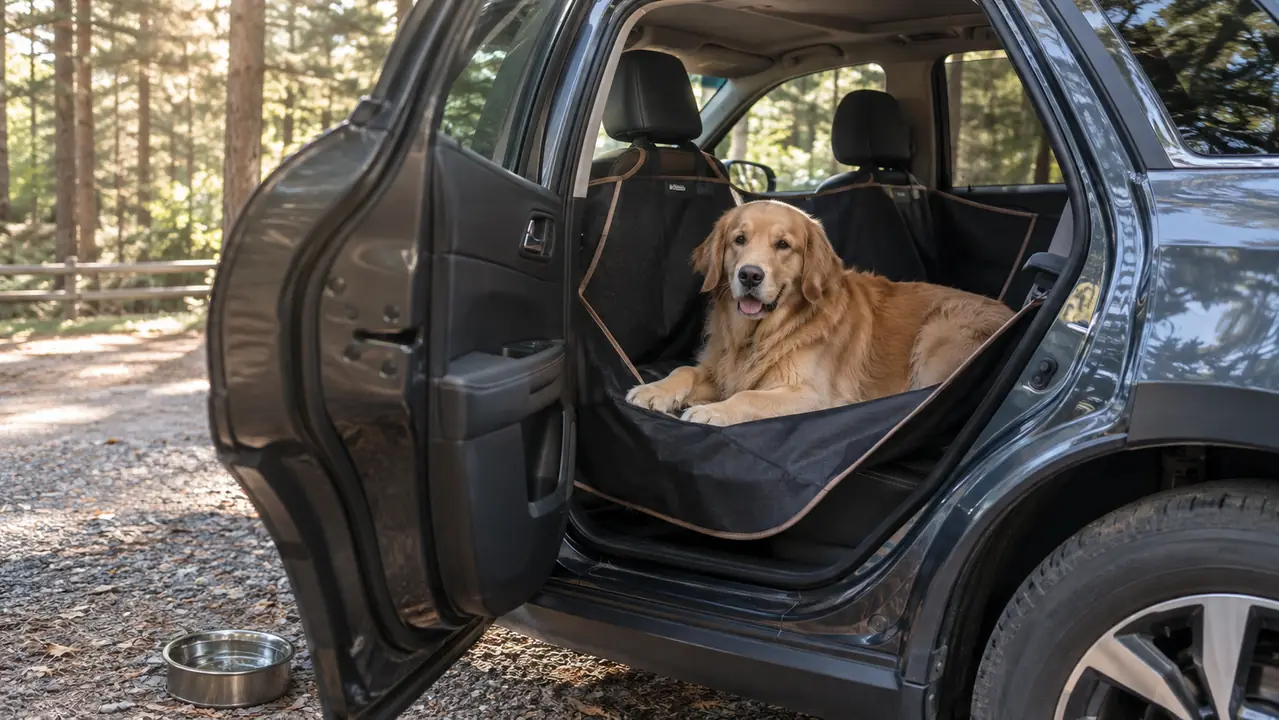
The first time I drove Pepper up to Birmingham to see my grandkids, I pulled into my daughter's driveway, opened the back door of the Outback, and sighed. Black hair and white hair, all over the seat, worked into the seams, stuck to the seat belts. She had also found a patch of red mud somewhere south of Hattiesburg and brought it along with her. I spent twenty minutes with a lint roller before I could even say hello to anybody.
That was the summer of 2022. Before the next trip I ordered the Active Pets back seat hammock in the standard size and rigged it in hammock mode, hooked over both the rear headrests and the front ones so Pepper rides in a bowl instead of sliding down into the footwell. I have been running that same hammock for a little over four years. It has been hosed off in my driveway more times than I can count, and it is still the only thing standing between my Outback and a dog who sheds like it is her job. What follows is the order I do it in, because the order matters more than most people expect.
The hammock that has lived in my Outback since 2022
Waterproof 600D Oxford fabric, hooks over both the rear and front headrests, and wipes clean between washes. It is the piece of gear I would replace first if it ever wore out.
Amazon Check Today's Price on Amazon →Step 1: Empty the back seat and look at your headrests
Before anything gets hooked or strapped, take everything out. The dog bed, the grocery bags, the umbrella, the travel mug that has been rolling around back there since March. Then vacuum the seat and wipe the seat belt buckles down with a damp cloth. It sounds like fussing, but a cover traps whatever is underneath it. Install over a layer of hair and grit and you have built a hair sandwich, and you will smell it by August.
Now look at your headrests. The Active Pets hammock hangs from them, so you need to know what you are looping around before you start. Some vehicles have headrests that come off and some do not, and either way the straps go around the posts. In the Outback I do this with both rear doors open and Pepper shut out in the yard, because a dog who sees you working in her seat will absolutely try to help.
One more thing worth checking while the seat is bare. Push down on the cushion and listen. If you hear a crunch, that is a few years of sand and cracker crumbs, and you want them gone before the fabric goes down. Five minutes with a vacuum now saves you from pulling the whole thing out again a week later. I learned that the hard way after a beach trip left half of Gulf Shores in my seat crease.
Step 2: Hook the back panel over the rear headrests first
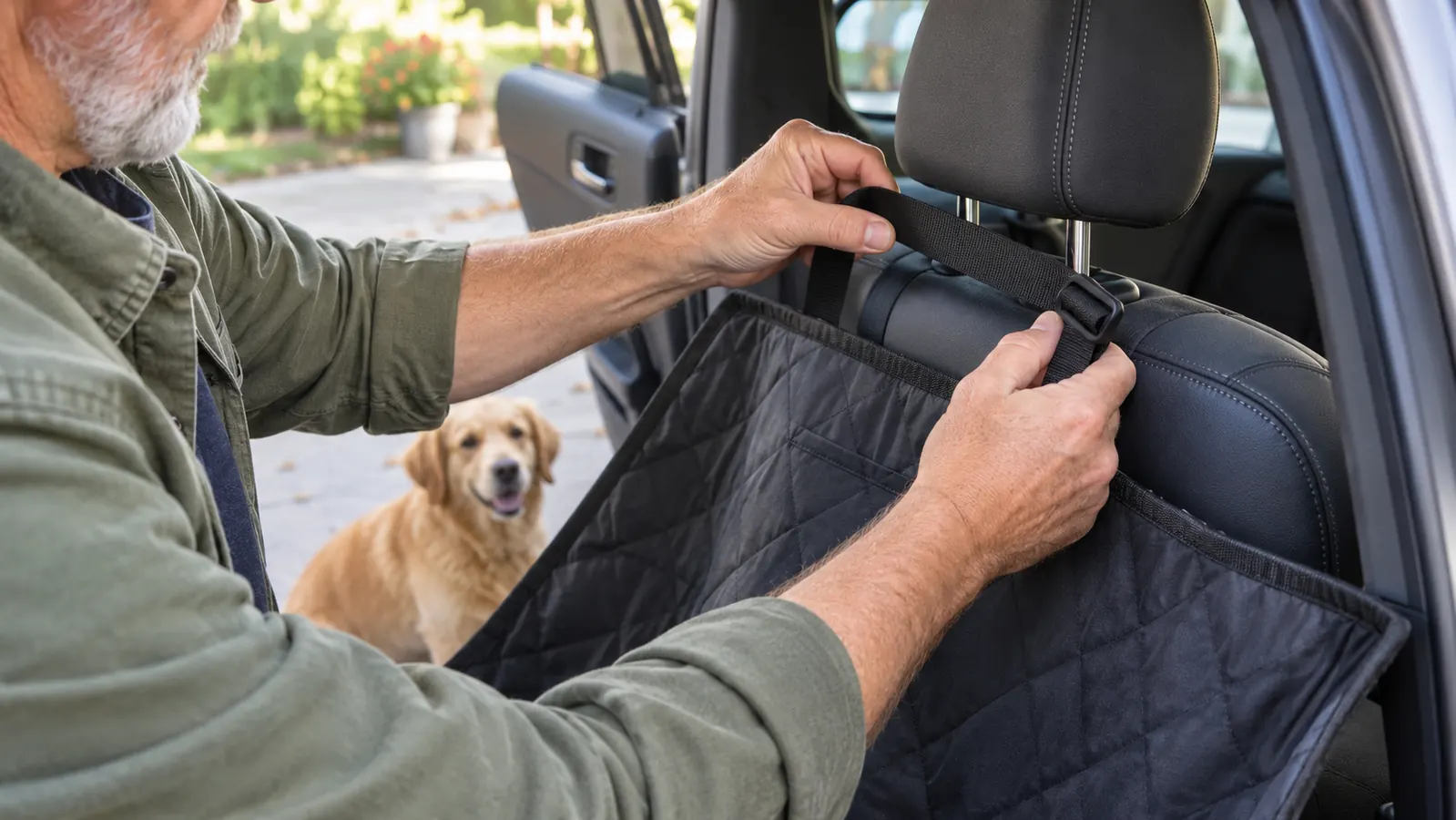
Start at the back. Drape the panel so the waterproof side faces up and the seat back is covered, then loop the straps over both rear headrests and pull them snug. Doing the back first means the fabric is already hanging where it needs to be, and you are not fighting the front straps while the rest of it slides off the seat onto the floorboard.
Snug matters more than tight. If the panel sags, hair and grit work their way down into the gap between the seat back and the cushion, which is the one place you cannot reach with a vacuum. I pull until the fabric sits flat against the seat back with no fold big enough to catch a paw. Flat also means Pepper is not standing on a wrinkle all the way to Birmingham, which she would let me know about.
The first time I did this it took maybe four minutes, and most of that was me reading the straps twice to make sure I had them the right way. Now it is a two minute job at the start of a trip if I have taken it out to wash. If your vehicle has a split folding rear seat, check that the hammock does not stop the seats from folding down. Mine stays in the car all the time, so I only think about that when I need to haul something bulky.
Step 3: Hook the front headrests to make the bowl
This is the step people skip, and it is the step that turns a seat cover into an actual hammock. The front straps go over the front seat headrests, which lifts the front edge of the fabric and makes a shallow bowl over the footwell. Leave those off and you have a blanket with ambitions.
The bowl is what stops the slide. Before I rigged it this way, Pepper would brace her front feet against the back of the console and lean forward on every curve, and I would spend the whole drive reaching back with one hand to push her off. Now she rides level, and when I tap the brakes in Hattiesburg traffic she shifts her weight instead of sliding into the floorboard. That is the difference between a dog who is loose in a seat and a dog who has a place.
Check two things before you call it done. First, the fabric should be taut enough that you cannot push a fist through the sag. Second, the front seats should still move. If the straps are so tight that the seats cannot slide back, you have overdone it, and your passenger will mention it somewhere around the second hour of the drive. Trust me on that one, because Ray mentioned it twice.
A little over four years, one hammock, and the Outback's back seat still looks like a back seat instead of a dog bed.
Step 4: Add the tether before you turn the key
I bought the IOKHEIRA dog seatbelt in October of 2022, about four years ago, for one reason. Pepper kept trying to climb into the front seat. The hammock gave her a comfortable place to lie down, but comfortable is not the same as contained, and a 42 pound dog with a plan will find a way over the console eventually. The hammock solved the hair. It did not solve the climbing.
It clips to the back of her regular walking harness, never to her collar, and the other end clicks into the rear seat belt buckle. There is a bungee section and the length adjusts from 19.6 to 31.5 inches. I keep it on the short end, short enough that she can sit up, turn around, and lie down, but not long enough for her to reach the console or the front seat.
I want to be plain about what this thing is. It is a tether that keeps her in the back. It is not a crash tested harness and I do not treat it like one. What it does is stop the climbing, and that alone changed our drives. She still pants for the first stretch of the road the way she always has, and then she lies down. Nothing has ever cured that, and I would not tell you otherwise. The hammock and the short tether together just mean I am not driving one handed anymore.
Step 5: Make the monthly wash a habit, not a project
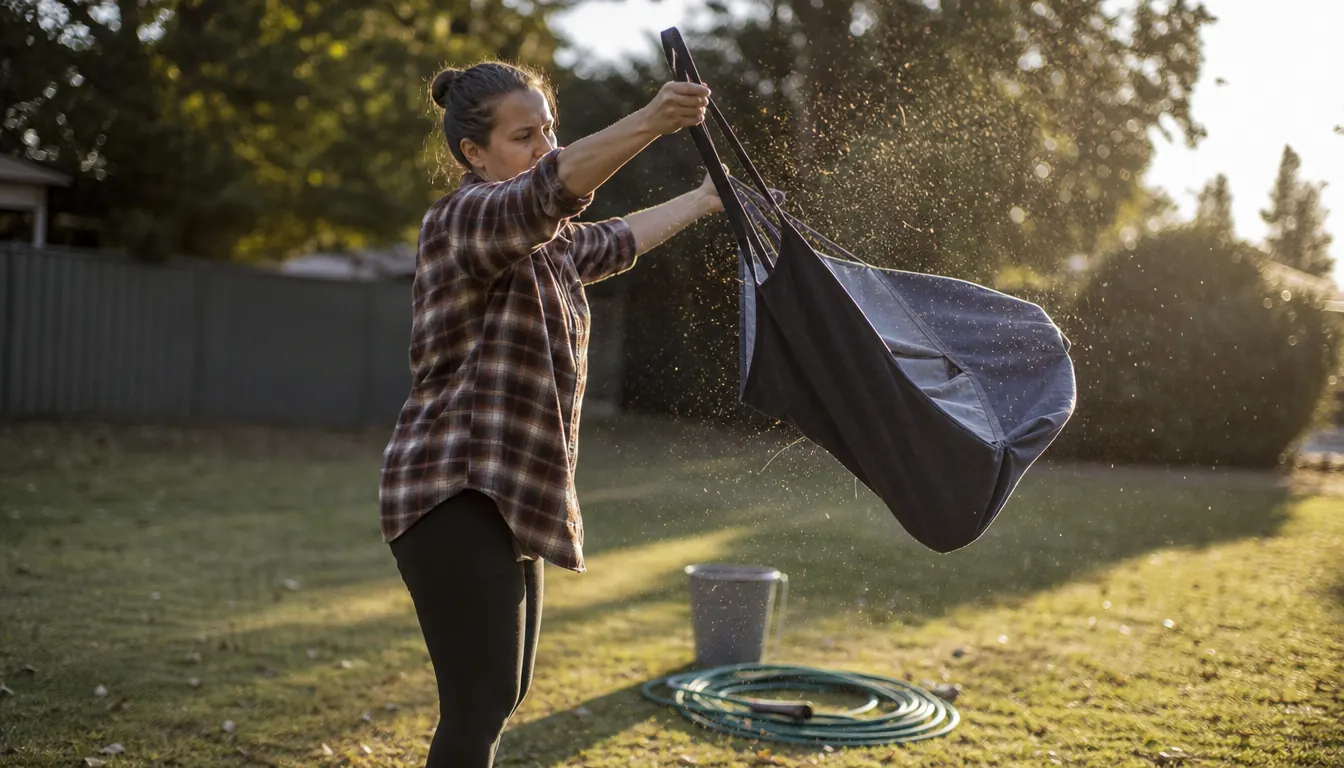
The Active Pets hammock lives in the car. About once a month, or after any trip that involved a mud puddle, I unhook it, carry it out to the driveway, and shake it hard. Then I hose it down and let it dry flat in the sun. The 600D Oxford fabric is waterproof, so mud and water sit on top instead of soaking through, and most of the cleaning is just rinsing.
When it needs more than a rinse, it goes in the washing machine on a gentle cycle and then gets air dried. I have never put it in the dryer. It is machine washable, but heat is not kind to anything with straps, and I would rather wait a day than find out. Dry it fully before it goes back in the car, because a damp cover in a closed vehicle will tell you about itself by the next morning.
Between washes, a damp cloth handles the small stuff. Gas station stops are when I do it, because Pepper is out of the car anyway and I have two minutes to spare. Wipe the seat back where she leans, wipe the spot where her paws land, and you will be surprised how long it stays presentable. Vacuum or wipe clean is the whole maintenance routine around here, and it has held up for a little over four years.
What Else Helps
The hammock handles the seat. A few small things handle the rest of the trip, and none of them are fancy. I am not a person who buys gear for the pleasure of buying gear. Everything in this car earns its spot.
Water first. I keep two SLSON collapsible bowls, 12 ounces each, one clipped to Pepper's leash with its carabiner and one in the glovebox. They come out at every gas station and rest area, and I pour from a jug I keep in the car. The bowls are only bowls, and that is exactly what I want them to be.
Packing happens the night before. The PetAmi travel bag holds her food in the two containers that came with it, plus treats, waste bags, a spare leash, her medicine, and a brush. The bag came with two silicone bowls of its own, and those are for meals at the hotel or at my daughter's house. The road bowls and the meal bowls do not get mixed up, because I am the one who decides and I have a system that works.
The last thing is the Chuckit! travel pillow bed, medium to large, 39 by 30 inches. It rolls into its own bag and rides in the cargo area. At the hotel it gets unrolled on the floor next to my side of the bed, and at my daughter's house it goes in the guest room. Pepper settles on it because it smells like home, and a settled dog at night means a settled dog in the car the next morning. I also keep an old towel by the back door for wet paws, and I brush her outdoors before we leave, which cuts the loose hair before it ever gets near the Outback.
Four years of Birmingham runs, one hammock, and a back seat I am not embarrassed to open
If you are tired of lint rollers and vacuuming seams, start here. The Active Pets hammock hooks over the rear and front headrests, wipes clean between trips, and comes out for a hose-down about once a month.
Amazon Check Today's Price on Amazon →