
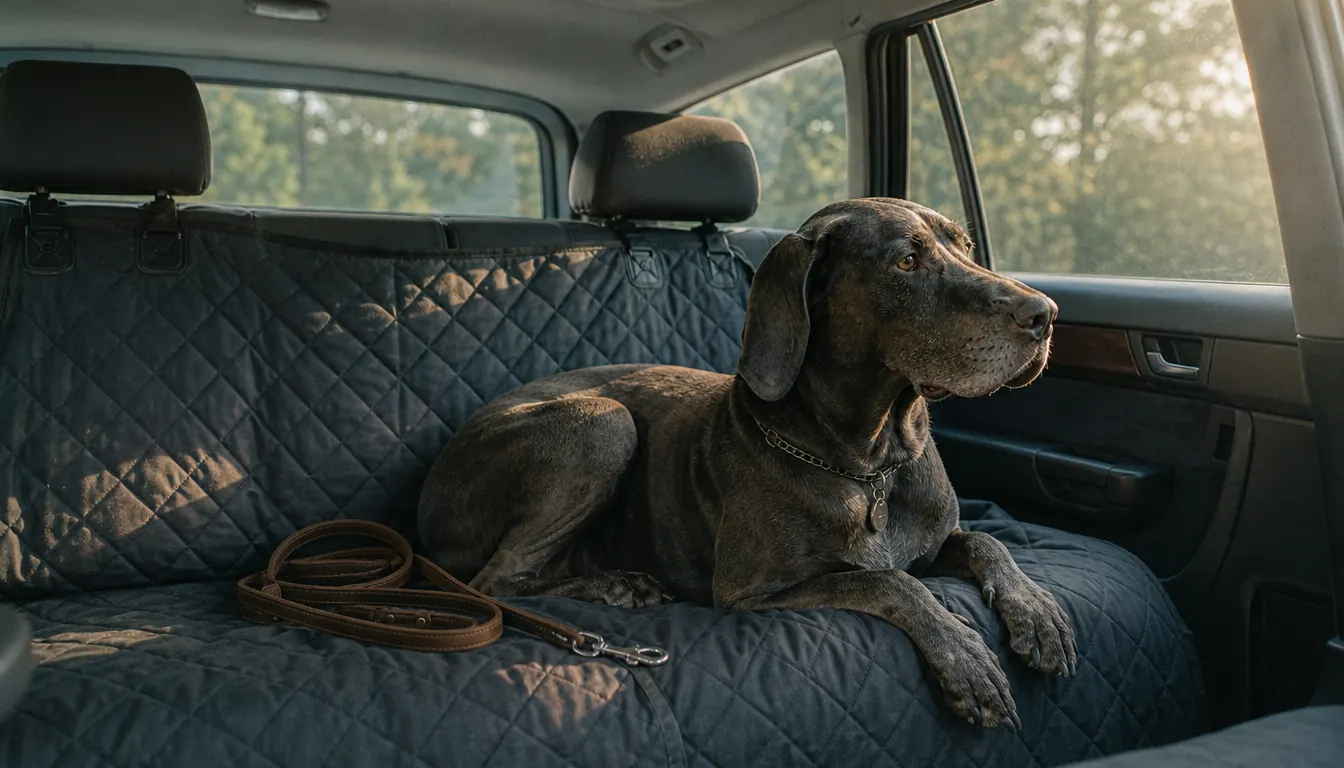
The first summer Ray and I drove up to Birmingham to see our grandkids, I packed for Pepper the way I pack for myself, which is to say badly. A zipper bag of food in one hand, a leash over my shoulder, a jug of water rolling around the floorboard, and a wad of waste bags stuffed in the console because I had forgotten the roll. By the time we hit Highway 49, half of it was on the floor and Pepper had her nose in the food bag. That was 2022. I have made that four hour drive about once a month ever since, and I like to think I have gotten better at it. The thing that finally fixed it was packing by step instead of by armful. About two and a half years ago I added the PetAmi dog travel bag to the routine, and the drive got quieter almost immediately.
None of what follows is complicated. It takes me about twenty minutes the night before we leave, usually while Ray is out in the driveway loading the cooler and asking me questions I have already answered. What it is, is a sequence. Things that live in the bag go in the bag. Things that live in the car stay in the car. Things I need at a gas station stay where I can reach them without unbuckling anything. Get the order right and you load up, walk the dog, and pull out. Get it wrong and you are the woman on the shoulder of the interstate with a bag turned upside down on the tailgate, digging one handed, while a forty two pound Australian Shepherd mix pants in your ear.
One bag, two food containers, two bowls, and no more jug on the floorboard
The PetAmi travel bag is 15.5 by 9.5 by 14 inches with 33 liters of space, a main compartment, two front pockets and two mesh side pockets. It comes with two food containers and two collapsible silicone bowls, which is the part that finally got my car uncluttered.
Amazon Check Today's Price on Amazon →Step 1: Empty the bag completely the night before
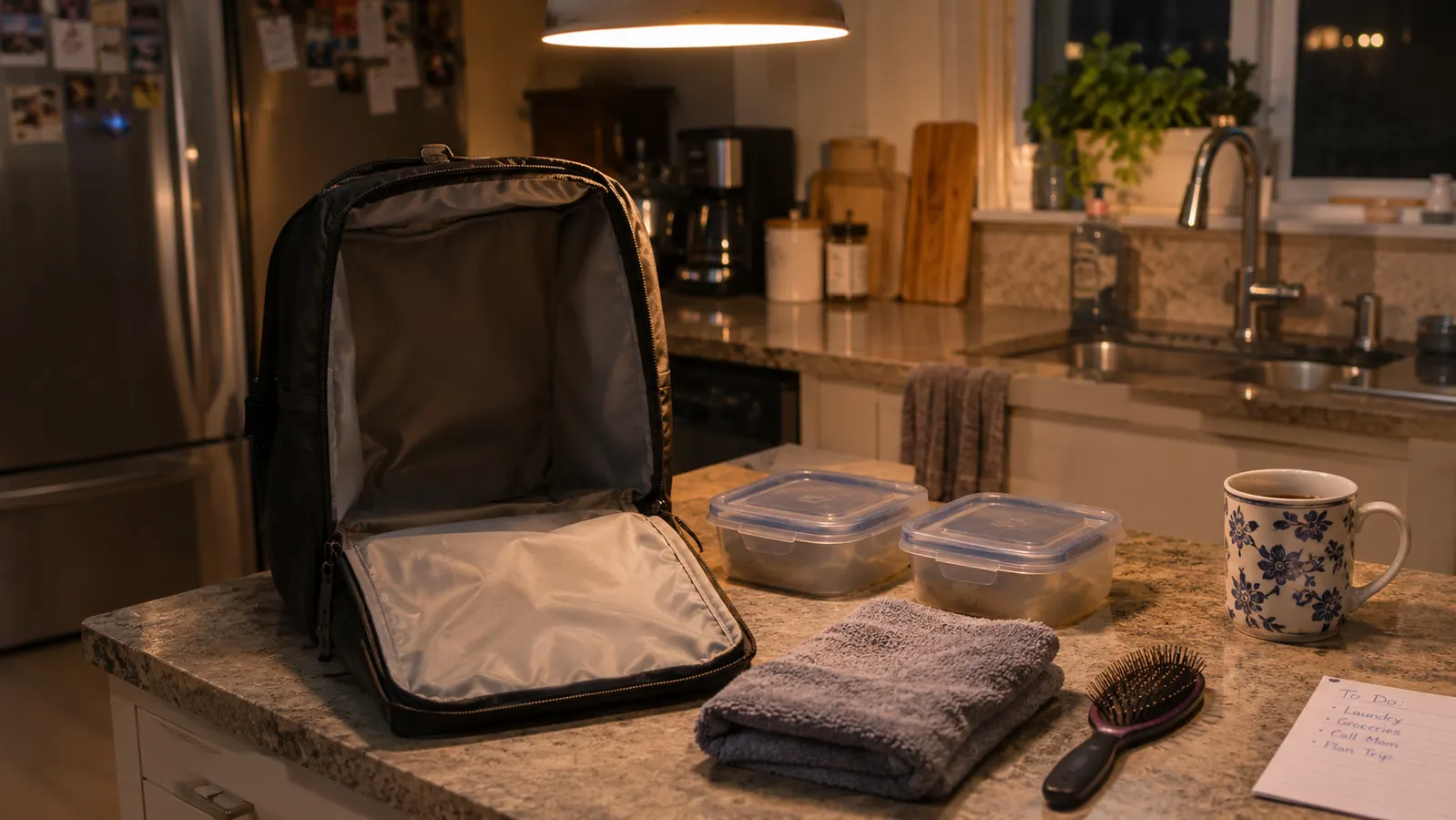
A bag that lives in the hall closet between trips collects things. A gas station receipt. A sock. Half a roll of waste bags that got damp in the back of the car and dried into a brick. So the first thing I do, the night before we leave, is carry the PetAmi into the kitchen and turn it out over the table. Every pocket, including the two mesh ones on the sides, which is where I once found a treat from a trip in April that Pepper had clearly been saving.
Then I wipe the inside down with a damp cloth and leave it standing open on the counter while I gather everything else. The bag is polyester with a water repellent finish, so it does not need more than that. I have been doing this about once a month for two and a half years and the zippers still run clean. Nothing has torn, nothing has separated at the seams.
Emptying it first sounds like a small thing. It is not. Half of the mess on that first trip in 2022 came from packing around junk I did not know was in there. If you skip this step you will be the person pulled off on the shoulder with a bag upside down on the tailgate, and your dog will be watching you from the back seat with her ears up like you have lost your mind.
Step 2: Food and bowls go in first, because everything else is negotiable
The PetAmi comes with two food containers and two collapsible silicone bowls, and those four pieces are the reason I bought it. Pepper eats about a cup and a half twice a day. For a four day trip to my daughter's house, I fill one container with her regular kibble and drop the measuring scoop in on top of it. The second container gets the backup portion, because I have run out of dog food in a strange town before and I would rather carry a little extra than repeat that.
The two silicone bowls live in the bag. They stay in the bag. They come out at the hotel or on my daughter's kitchen floor, get filled, get washed in her sink, and go straight back in. The bowl I use on the road is a separate collapsible bowl that clips to Pepper's leash with a carabiner, and it stays clipped to the leash the entire trip. I made the mistake once of using the bag bowls at a rest area and then having to dig wet bowls out of the main compartment for the rest of the drive. Learn from me.
The containers go back in the main compartment upright, with the bowls stacked flattened beside them. Not in a front pocket, not loose in the back of the car. The bag is fifteen and a half inches long and nine and a half inches deep, and the containers sit level in it. Level containers keep their lids on. Containers that ride at an angle on the back seat do not.
Step 3: Small things go in the pockets, big things go in the middle
This is the step where the bag earns its keep. The main compartment is for volume: food containers, bowls, the towel, the folded throw, the sweater if we are headed to the mountains. The two front pockets are for everything that goes missing. Pepper's heartworm pill and her flea and tick preventive go in a sandwich bag in the left front pocket, every single trip, same pocket, so I never have to think about where they are. The brush goes in the right one with a spare leash.
The two mesh side pockets hold the roll of waste bags and a small bag of treats. Mesh matters more than I expected. You can see what is in there without unzipping anything, which sounds lazy and is in fact the whole point. When I stop for gas at dusk outside Meridian, I can look at the side of that bag and know in two seconds whether I have bags and treats.
Pepper is a herder. She wants to know what is happening and she wants to be in the middle of it. If I am standing in a parking lot unzipping three pockets in a row, she is up and pacing and panting before I have found a pill. Packed the same way every time, I unzip one pocket and I am done.
Step 4: Pack a road kit that never goes inside the bag
Here is the distinction that made the biggest difference for me. The PetAmi is a hotel bag. It is not a reach back and grab bag. It rides in the car closed, and it opens once, at the destination. Everything I need during the drive lives somewhere else.
That road kit is small. A refillable jug of water from the kitchen tap, because Pepper drinks tap water at home and strange water upsets her stomach. The collapsible bowl clipped to her leash. A short lead. A handful of treats in my own jacket pocket. Waste bags in the driver's door pocket. That is it. At a rest area I am out of the car, leash on, bowl filled, dog walked, and back on the road in under ten minutes without ever opening the bag.
Before I sorted this out, the bag came out at every stop and got repacked at every stop, and something got left on a picnic table at a welcome center outside Tuscaloosa. Keeping the bag closed until we arrive is the single habit that has saved me the most aggravation.
Step 5: Load the car in this order, and put the bag last
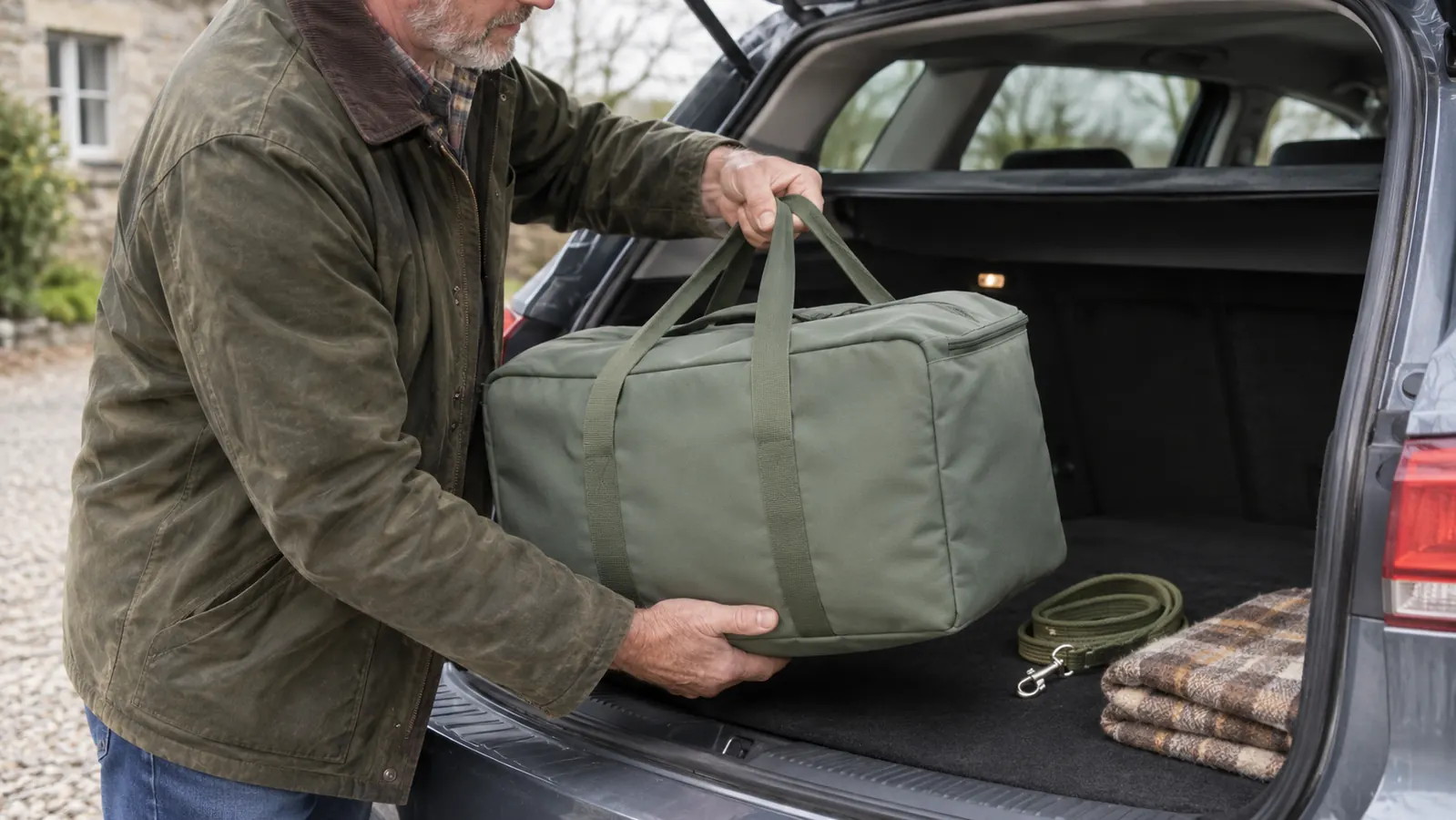
The order in the Outback does not change. The back seat hammock stays hooked up all the time, so that is already done. Pepper's tether clips into the rear seat belt buckle and to the back of her walking harness, never to her collar, and I keep it short enough that she can sit and lie down and cannot reach the console. It is a tether, not a crash tested harness, and I have never pretended otherwise. Then the rolled travel bed goes in the cargo area, then the cooler, then the bag.
The bag goes on the floor behind my seat or back in the cargo area. It does not go on the seat next to Pepper, and it does not go in the footwell where she can nose at it. A bag full of kibble within reach of a bored dog is a bag that will be open before you cross the state line.
The bag goes in last because it comes out first. When we pull into the hotel parking lot or my daughter's driveway, I want to be able to put a hand on one handle and carry the whole trip inside in one trip, food and medicine and bowls and all of it. Fifteen and a half inches long with a shoulder strap, and I have carried it up a flight of motel stairs more times than I can count.
What Else Helps
A bag solves the packing. It does not solve the drive. The other three things that have made these trips easier for us are all about the car itself. The back seat hammock, a little over four years old now, keeps Pepper from sliding into the footwell and keeps the black and white hair off my upholstery. The tether keeps her out of the front seat, which she would absolutely climb into otherwise. And the travel bed that rolls into its own bag rides in the cargo area and unrolls on the hotel floor next to my side of the bed.
That bed earned its place after a stay where Pepper paced half the night on hotel carpet. She settles on it now because it smells like home, and a dog that sleeps is a dog that rides well the next morning. Rolled up, it takes about as much room as a folded blanket.
The last thing, and this is the one nobody tells you: stop more often than you think you need to. I stop every two hours with Pepper, whether she seems to need it or not. She is anxious for the first half hour of any drive and always has been. She pants and shifts and then, somewhere around the Hattiesburg exit, she lies down. She has never stopped panting that first stretch entirely, and I have quit expecting her to. A short walk at a rest area settles her faster than anything I have tried.
A bag does not make the drive shorter. What it does is end the twenty minutes of digging in a parking lot before we can even walk the dog.
Pack it once the night before and carry the whole trip inside in one hand
15.5 by 9.5 by 14 inches, 33 liters, two food containers and two collapsible bowls included, with a main compartment, two front pockets and two mesh side pockets. Packed the same way every trip, it is the difference between a routine and a scramble.
Amazon Check Today's Price on Amazon →