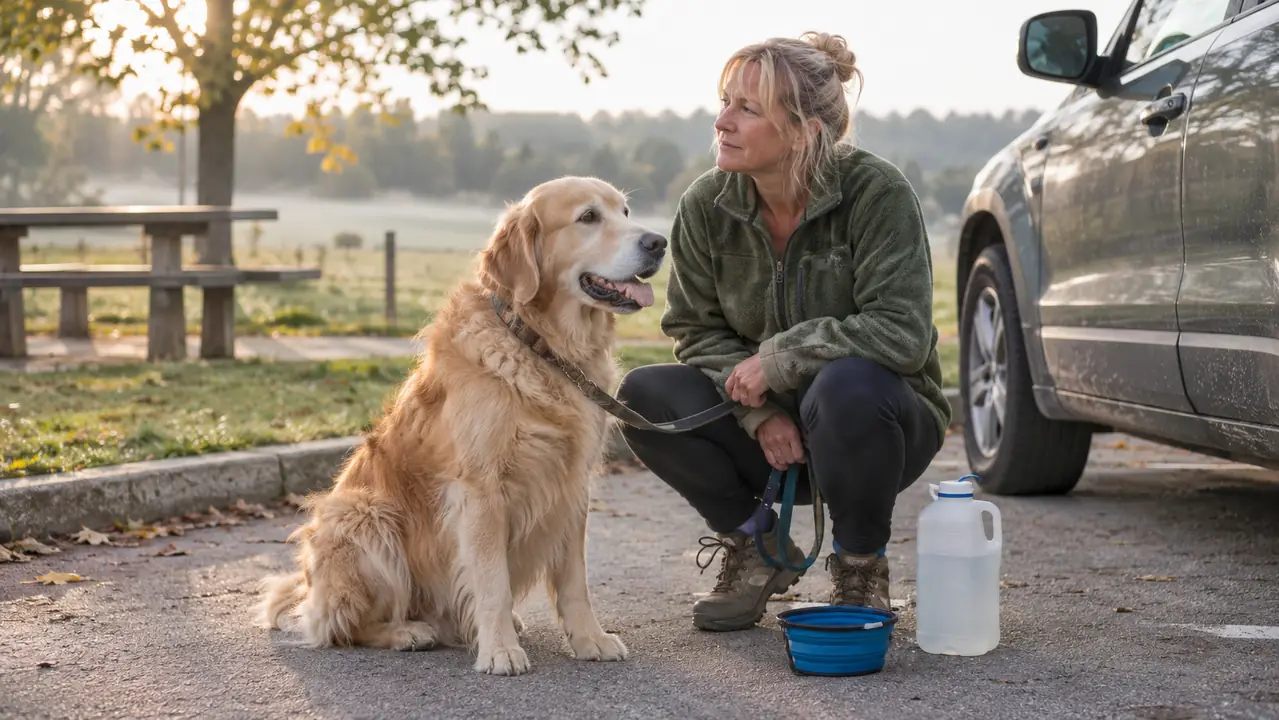
Pepper has thrown up water on the back seat of my Subaru exactly twice in four years, and both times it was my fault. Both times I had poured a bowl to the brim at a gas station, let a panting dog drink the whole thing in one go, and then buckled her back in for another ninety minutes of highway. She is a six-year-old Australian Shepherd mix, about forty-two pounds, with a speckled black and white face, and she spends the first half hour of any drive breathing like a little steam engine. What I have learned the hard way is that how you offer the water matters as much as whether you offer it at all.
What I use now is a pair of SLSON collapsible bowls, the two-pack that comes with a carabiner for each one. They have been in the car since May 2023, which makes it about three and a half years of monthly Birmingham trips, a couple of Smoky Mountain weekends, and one very hot run to the Gulf coast. Each bowl holds twelve fluid ounces, measures roughly 5.1 by 3.5 by 2.1 inches when it is open, and folds down to half an inch tall. Each weighs about 3.5 ounces. One is clipped to Pepper's leash, one lives in the glovebox, and a plain refillable jug in the cargo area does the actual carrying. The bowls are bowls. They do not store water, and that turns out to be the whole point.
One bowl on the leash, one in the glovebox, and the jug does the rest
The SLSON two-pack comes with a carabiner for each bowl. Twelve fluid ounces apiece, folds to half an inch, and it clips to a leash, a belt loop, a backpack or a crate. This is the pair that has ridden in my Outback for about three and a half years.
Amazon Check Today's Price on Amazon →What Travels in the Car With Us
The back seat of the 2019 Outback is set up the same way for every trip. The Active Pets hammock has been in there a little over four years, hooked over the rear headrests and the front ones so Pepper cannot slide down into the footwell. It is waterproof, which mattered more than I expected the first time a bowl tipped over on a curve. She rides on an IOKHEIRA tether clipped to the back of her walking harness, never her collar, kept short enough that she can sit and lie down but cannot reach the console. It is a tether, not a crash tested harness, and I want to be plain about that.
The PetAmi travel bag gets packed the night before with her food in the two containers that came with it, plus treats, waste bags, a brush and her medicine. That bag has its own two silicone bowls in the side pocket. Those are for meals at the hotel or at my daughter's house. The SLSON pair is the road water setup, and the two do not cross over. I learned that after spending ten minutes at a rest area outside Tuscaloosa hunting for a bowl that was zipped in the bag the entire time.
The Chuckit bed rolls up in the cargo area and goes into whatever room we are sleeping in. She has had it about two and a half years, and it gets unrolled on the floor next to my side of the bed. It smells like home instead of like a hotel, and that is worth the space it takes up.
How to Water Your Dog on a Road Trip
Step 1: Start With a Full Jug and Empty Bowls
The night before we leave, I fill the jug at the kitchen sink and set it by the door with the rest of the pile. The bowls stay folded. Water sitting in a bowl inside a moving car is a puddle waiting for a curve, and Pepper has enough going on without a wet seat under her for four hours. Folded, the pair takes up less room than a paperback.
In the morning I check two things. The jug is in the cargo area, and both bowls are where they belong, one on the leash and one in the glovebox. That second check sounds fussy until you have driven twenty minutes back toward home because you were not sure. Twelve ounces per bowl is right for a dog Pepper's size. If you have two dogs, or a dog over about eighty pounds, you will want to carry more water than one bowl holds and refill between stops.
Step 2: Clip One Bowl Where Your Hand Can Find It
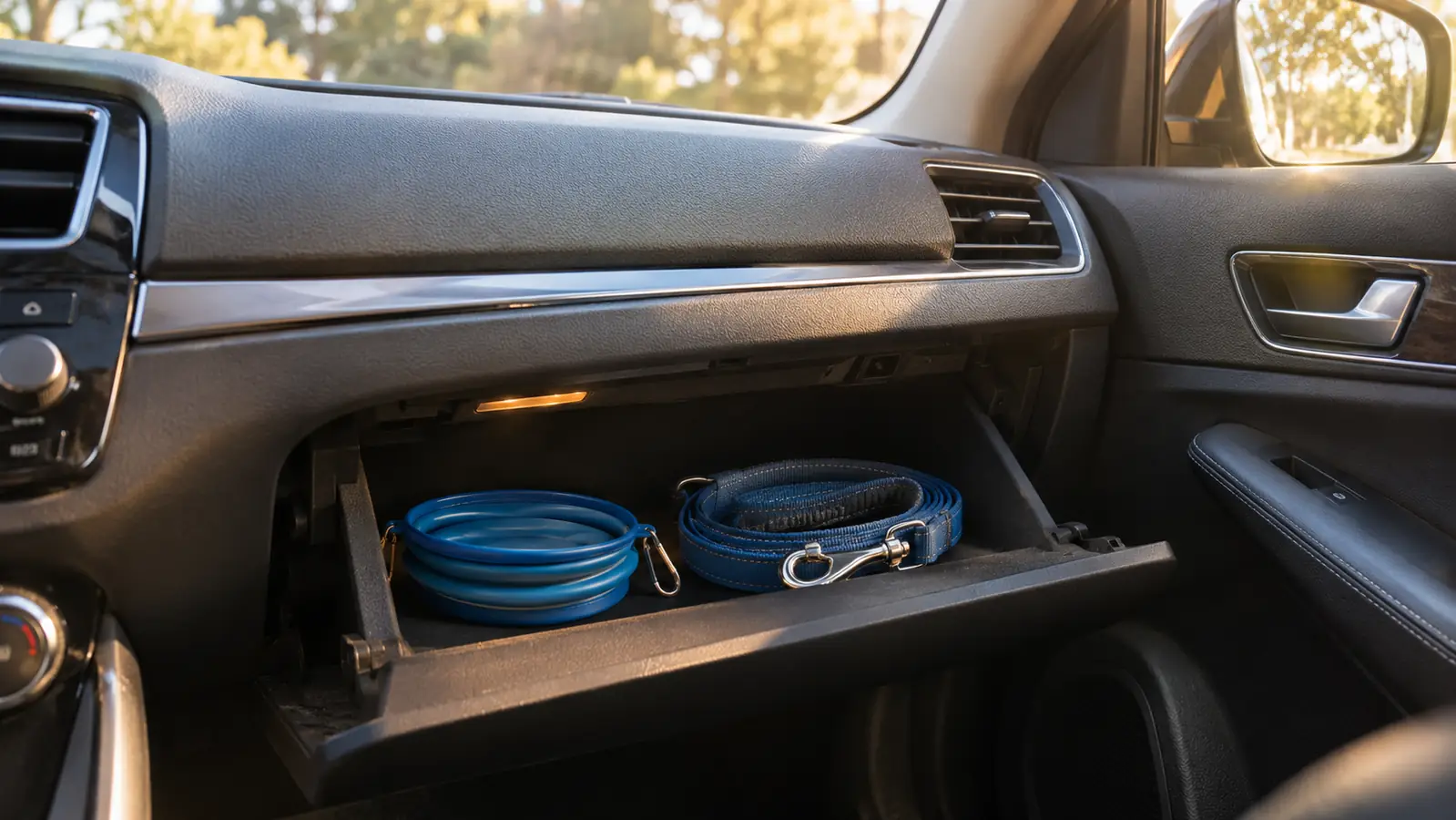
The carabiner goes through the loop on the bowl and around the handle of the leash, right below my hand. The second bowl sits in the glovebox with the registration and a spare pair of sunglasses. That is the whole storage plan. The listing says the clips will also go on a belt loop, a backpack, a collar or a crate, and I believe it, because the gate on the carabiner is wide enough for all of those.
Reaching matters more than people think. The worst version of this is a bowl somewhere in the cargo area, under a bag, while you are twisted around in the driver's seat with the engine still running. I did that version for about a year. Now the bowl is on the leash, the leash is on the seat beside me, and my hand is on it before my foot is on the pavement.
Having a second one is not really about backup. It is about not carrying the leash bowl into the hotel room and leaving it there. The glovebox bowl stays in the car no matter what, so there is always one available on the morning we head home.
Step 3: Pick the Right Stop and Set Up Before You Open the Door
Rest areas beat gas stations and gas stations beat the shoulder of the road. Either way I look for level ground, shade if it is July in Mississippi, and a spot where Pepper is not standing next to moving traffic. She does not need a lawn. She needs six feet of pavement and a minute to sniff it.
The leash goes on before the door opens. Her tether stays clipped to the seat belt until I have the bowl unfolded in my hand, because a dog who has been riding for two hours will try to launch past you the second there is a gap. Pepper is better about that than she was at two years old, but better is not the same as good, and I do not test it in a parking lot.
Then I let her walk first. Five minutes of sniffing and a chance to pee, and water comes after. A dog that has just stretched her legs drinks at a sane speed. A dog that has been lying on a hammock since Hattiesburg and gets a bowl waved at her the second the door opens will inhale it and look surprised about the consequences.
Step 4: Pour a Little, Offer It Low, and Go in Rounds
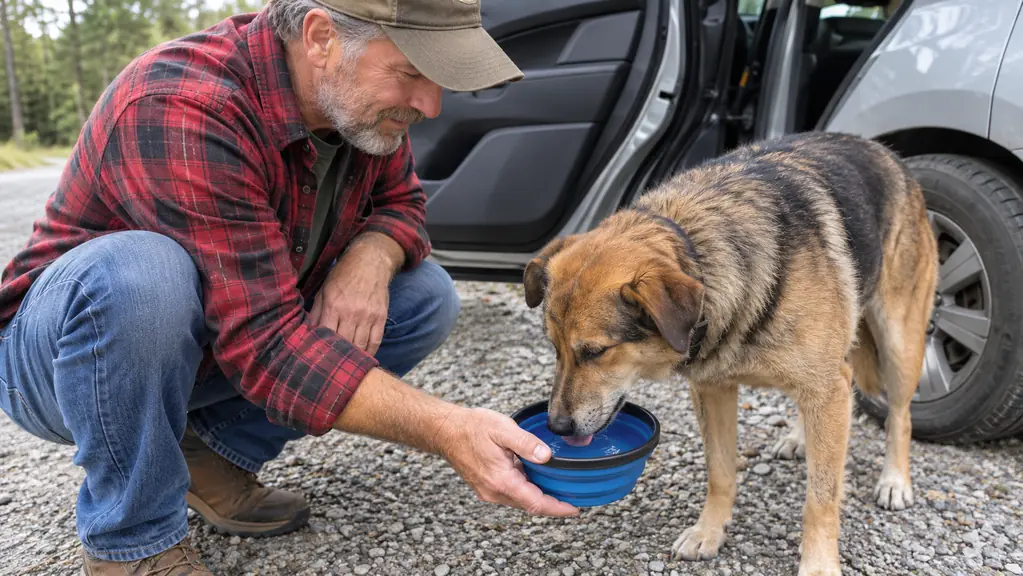
I pour about a third of the bowl, enough to cover the bottom and then some, and I hold it low, either flat on the pavement or steadied between my feet. She comes to it. Holding a bowl up at chest height is how you get water down the front of your shirt and a dog who is now suspicious of the whole procedure.
Then we wait. Ten minutes at a rest area is plenty of time to offer the bowl, let her wander, and offer it again. Two or three rounds beats one long drink, and the second round is usually the one she actually wanted. The third is often a polite sip and a look that says she is finished.
The other habit I dropped was leaving water sitting in the bowl in the car. In July that water is bath temperature in twenty minutes and it sloshes on every curve. The bowl gets emptied, the leftover goes back in the jug, and the bowl gets folded. The hammock is waterproof, but I would rather not keep testing it.
Twelve ounces is not a lot of water. It is exactly enough to get a panting dog through a rest stop without a puddle on the back seat.
Step 5: Fold It, Rinse It, and Reset for the Next Leg
It collapses flat in one motion. I shake it out, wipe it with a paper towel, and clip it back on the leash in the same spot it came from. Same place every time is the only reason I have not lost one in three and a half years. The glovebox bowl gets checked at the same moment, because a bowl that has slid under the passenger seat is a bowl I will be hunting for at the next stop.
At the end of a trip I wash both of them with dish soap and warm water, stand them open on the counter to dry, and put them back in the car. They are soft plastic and odorless when they are clean, but a bowl that has held water in a warm car for a week does not stay odorless. The SLSON pair has been through about three and a half years of this and still folds flat. The listing carries a two year warranty, which I have never needed to use.
What Else Helps
The bowls are one piece of a routine, not the whole thing. The hammock handles the mess, and the waterproof fabric has saved me from more than water. The tether keeps Pepper from climbing into the front seat, which she will absolutely try if the first half hour goes unsupervised. The bed in the cargo area makes hotel nights easier, and the PetAmi bag with its own food bowls means I am not digging through a suitcase at nine at night looking for dinner.
The last piece is timing. We leave early, before the heat builds, and I plan stops about ninety minutes apart instead of waiting for a dog to look desperate in the mirror. Four hours to Birmingham is two stops, three if traffic is bad. I also walk her before we load up. A tired dog rides better than a fresh one, and a fresh dog with a full bladder rides worst of all. Her nerves in the car have eased over the years, but they have never gone away, and I plan around that instead of pretending otherwise.
The bowl you will actually use is the one already clipped to the leash
Two bowls, two carabiners, and a fold that takes one hand. Clip them on the night before your next drive and you will not be hunting through a bag at a rest area while the dog waits.
Amazon See the SLSON Bowls on Amazon →